

In ancient Greek mythology, the Hydra is a fearsome, many-headed creature that is almost impossible to defeat. Cut off one head, and two more appear in its place.
Sound familiar?
If the Hydra is your monster, you may be dealing with anxious thoughts. One worry gets resolved, and two more take its place. You try to reassure yourself, fix the thought, or eliminate the fear—but they just keep regenerating.
How to travel with the Hydra
The Hydra is not defeated by attacking every head. That only makes things worse.
The more urgently you try to eliminate every anxious thought, the more power you give a creature that ultimately feeds on attention.
Your next step is to notice the pattern without feeding it. When the head of a new worry appears, don’t follow it into battle.
Simply recognize it, let yourself feel it for a moment, and then let it pass.
Next, shift from fighting each head to addressing what sustains the creature beneath it. Anxiety often feeds on uncertainty, fatigue, need for control, and fear of not being able to handle what comes next.
Stop fighting heads. Address the root cause.
Over time, something changes. When you stop trying to cut off every anxious thought, they stop replicating so quickly. The heads still appear, but they lose authority. You stop treating every thought as a command. You stop mistaking noise for danger.
Instead of fighting it, learn to live alongside the hydra, to stay present in the current moment of your life, and let the hydra fall into the background. The goal is not to reach a life with no anxious thoughts at all, but a life where anxious thoughts no longer decide your direction.
The Hydra was never about winning a final battle. It’s about learning that not every thought needs to be fought.
Ready to face your monster?
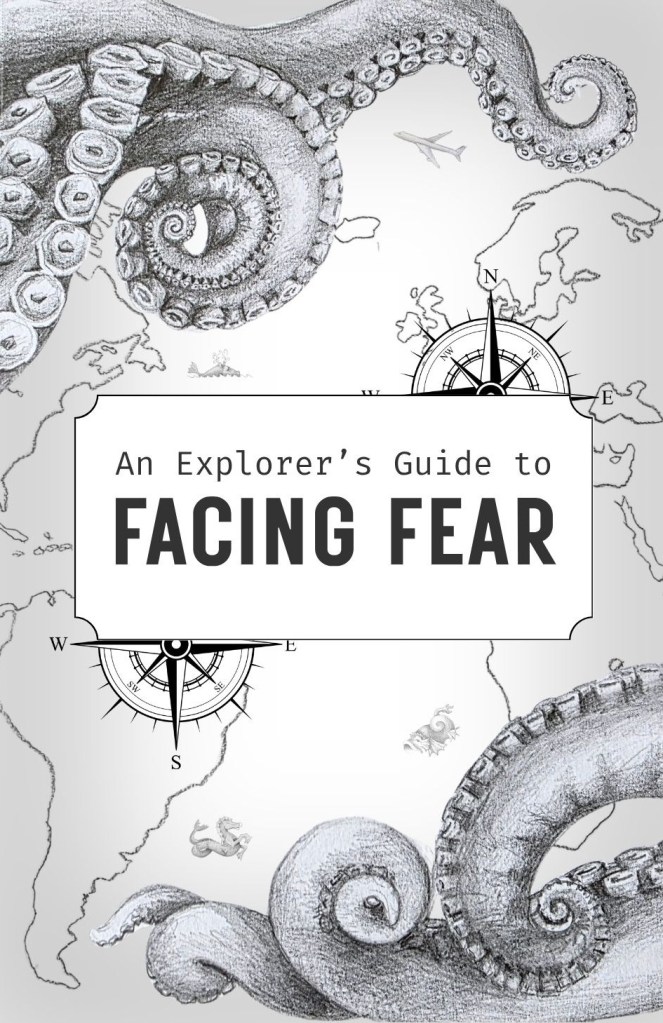
An Explorer’s Guide to Facing Fear is a pocket-sized field guide for the moments when life feels uncertain, uncomfortable, or downright scary.
It shows that you don’t have to be fearless – and how to sail anyway.
This result is intended for self-reflection and entertainment only. It is not a medical diagnosis, psychological assessment, or professional advice. If you are experiencing significant emotional distress, mental health concerns, or a crisis, please contact a qualified healthcare professional, call 911, or seek emergency assistance immediately.

